Skip This


Abstracts. A female buffalo in Khajura V.D.C. in Banke district having typical sign of Degnala Disease was successfully treated with ANTI-DEGNALA LIQUIDE 10 ml orally along with other symptomatic treatment. Animal was well respond to the treatment and complete recovered after 15th day of treatment.
Keywords: Degnala disease, Buffalo, ANTI-DEGNALA LIQUIDE


INTRODUCTION
Deg Nala disease which causes necrosis and gangrene of the dependent parts in buffaloes and cattle is known to exist in Indo-Pakistan since some cases around Muridke (District Sheikupura) a placeclose to Nala Deg - a monsoon rain water stream were recorded (Shirlaw, 1939). Widespreadoccurrence of the disease has been reported from rice grown areas of Indo-Pakistan (Irfan & Maqbool,1986; Irfan, 1971; Kalra et al, 1972) (IRFAN andMAQBOOL, 1986) and causes considerable economic losses. This disease got its name because cases in buffaloes were first seen in the Degnala (small river) area of Pakistan in year 1929-30 (Shirlow, 1939). There is evidence that during 1960-70s the veterinarians in panjab area of Pakistan and india again discussed about this disease. In 1973 the ricestraw from disease area of Punjab ludhiyana of india was found to infected with fungus Fusarium SPP tested in kyu surryy laboratory of UK. The investigators have claimed that due to feeding to fungus infected feed and straw, the toxin producedduring metabolism is the cause of disease and symptoms in buffaloes.Degnala is caused by mycotoxin produced by different species of fungi namely Fusarium spp., Aspergillus spp., Penicillium spp., etc., while according to Indian researchers, it is due to excess ingestion oftoxic amount of selenium in rice straw grown onselenium rich soil. It has seasonal incidence andsporadic cases mainly seen in winter monthswhen paddy straw is used as fodder (Ifran, 1971).In present context above mentioned diseaseis not only prevalent in vicinity of Deg Riverbut also prevalent in all those areas where bufflaloes are kept fed with rice straw. In indiathis disease is seen annually in Panjab, Hariyana, uttar Pradesh, Uttaranchal, Bihar, bangal, Jharkhand, chhatisgard states.
In Nepal Degnala disease was first reportedin 1988 in Banke district but epidemicoutbreak was in 2000 AD in jhapa, morang, sunsari, siraha, saptari, Banke, and bardia districts. Again this time after 12 yrs this disease is reappeared in above mentioned districts and winter rain is responsible for it.
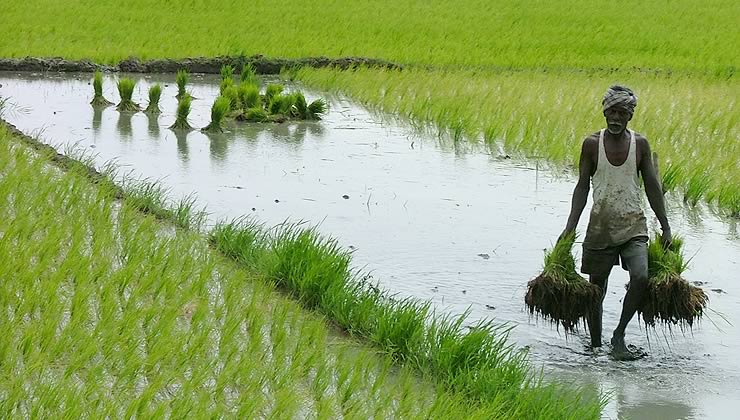
The basic reason behind this is that ricestraw was affected during harvesting due to continuous rainfall during the month of November and December. The paddy plants were submerged in the field during harvesting and farmers stored the straw without adequate drying.
HISTORY AND CLINICAL OBSERVATION
A female buffalo was presented with the history of animal had gradually lost its appetite for several days back leads to debilitated body condition, dullness, reduced feed intake, swelling of distal part of legs and lameness. On clinical examination, we found 102° F temperature, alopecia and sloughing of the hoof, gangrenous swelling ofcoronate and fetlock region of hind legs (Figures1 and 2).
Pathogenesis Factor
The cause of symptoms in this disease has been thoroughly studied by this colouminst during his Master degree in veterinary medicine. The mycotoxin produced by the metabolism of Fusariam fungus dissolves the collagen and elastin keratin tissues into collagenase and elastinase keratinase enjyme respectively. As a result in the dependent parts of ear, tail, foot blood supply is obstructed and ultimately tissue die of anoxia. In addition to this toxin severely affects liver, lungs, heart, and kidney.
TREATMENT AND DISCUSION
If possible avoid feeding of desiccated straw
Antidegnala liquid @ 10ml orally for 10 days.
Feed properly dried straw and feed half quantity. Give adequate supplementation of green fodder and tree fodder.
Treat the infected with sodium hydroxide @ 1% for 20kg straw.
Mineral mixture and lactoline should be given along with straw.
Figure 1: Sloughing of Hooves of Hind Legs

Figure 2: Alopecia and Rough Hair Coat

Treated with Anti Degnala Liquor by Dr. Karki
Senior Veterinary Health Management Consultant
M.V.Sc.Preventive Veterinary Medicine
DIVINE VETERINARY CLINIC
Sinamangal Kthmandu Nepal












प्रतिक्रिया थप्नुहोस्